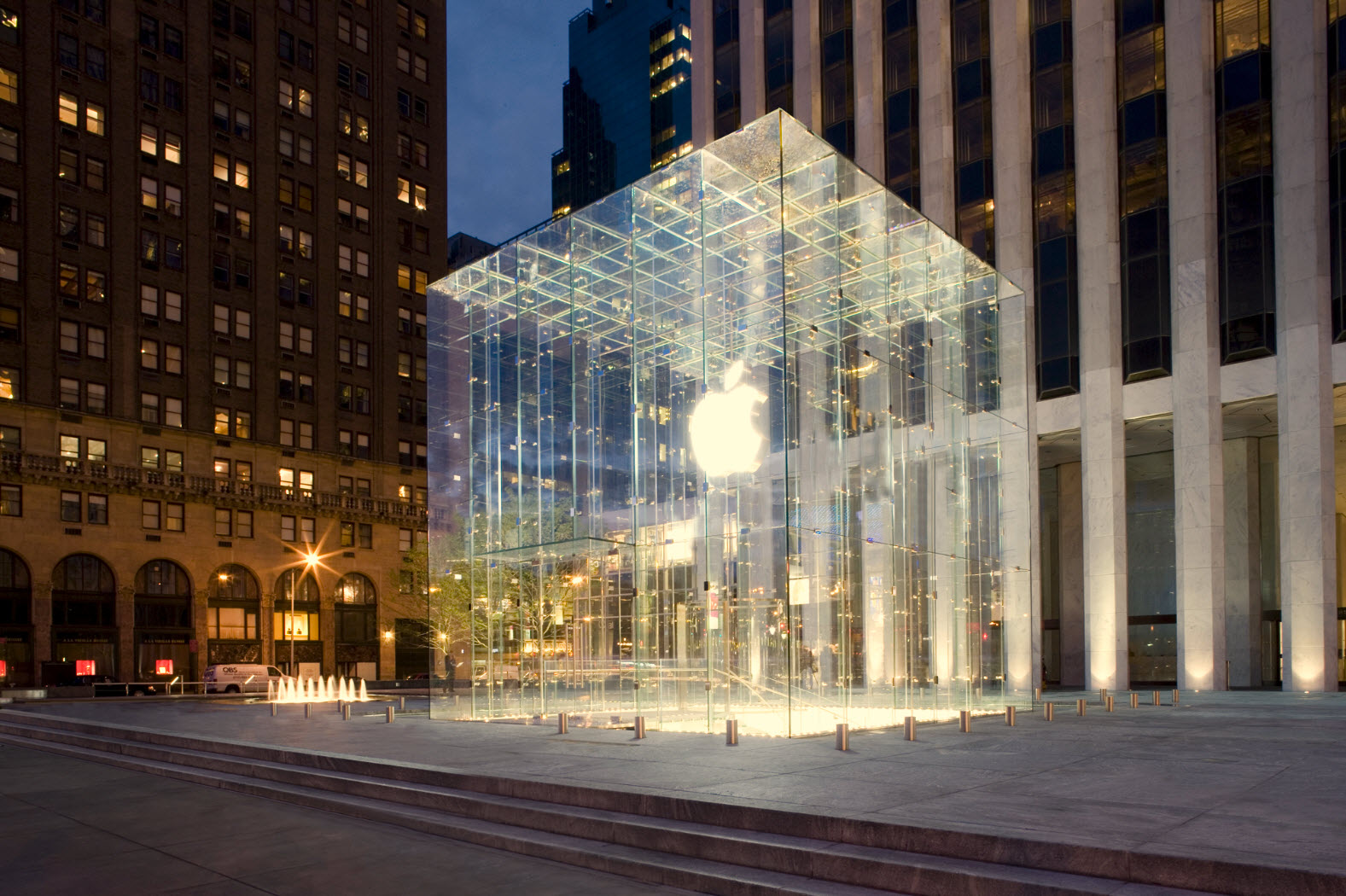
At the 4G Wireless Evolution Conference in Miami last week, Tim Wagner of Samsung shared with the audience a teaser clip of Samsung’s Super Bowl ad for the Galaxy Note. Unless I missed it, the commercial came late in the game, and has since had the sequel play as well. Ahead of the Super Bowl was a prequel featuring a frustrated line of people in front of something looking similar to an Apple Store waiting to buy the “next big thing.” The Super Bowl ad featured the Galaxy Note as the future device that is already here.
Having held it in my hands at 4GWE, I think the device has been well thought out. It’s pocket size but larger than a traditional smartphone and smaller than a tablet. The commercial highlights video calls and social networking and the ad is very consumer focused. Currently, It’s available on AT&T’s network but Samsung has equivalents for all the major carriers.
More importantly than the carriers, Samsung has launched its SAFE Program which is an acronym for Samsung Approved For Enterprise and features an independent testing solution not just for Samsung but for other devices as well. The program features security analysis and highlights the use of the dual core of the Samsung device where the encryption capabilities reside independent of the Android OS. In other words, they have locked down the phone, while still supporting the Android app market.
Tim is also a former RIM employee and he sees the opportunity to support a frustrated IT community that is finding the security problems of prosumer devices daunting. Samsung has built up a direct relationship with the largest enterprises and is looking to impact purchasing decisions and align themselves with the business requirements.
In theory this is a good strategy but the tidal wave of the consumers is a daunting market. I heard at 4GWE that last year’s Super Bowl was the first time that the fans in the stands sent more data out than during the game. Based on all the lights of the phones behind Madonna, I would say that tipping point has come and gone. And the question that remains is will 4G ever be needed when WiFi services so much of the market and is a lingua franca for all devices.
While Jeff Thompson continued to show how Towerstream’s WiFi network was continuing to expand across Manhattan, we also heard from Anton Wahlman and his concern that even though every carrier talks about 4G migration the ability to connect to other carriers networks via 4G will be very problematic. Differences in frequencies, technologies and strategies point out that the differences are going to be to make a universal device in the U.S. much harder to achieve than the world phones we experienced in the 2G days. However, clearly there is no looking back as is seen by Google’s stripping Android of support for CDMA.
One panel at 4GWE posed the question, how do we expect to have 4G support Roaming in an LTE environment which is mandated by the FCC? Run by Paul Barbagallo of Bloomberg BNA and featuring James Tagg of Truphone, Paul Sinderland, Wilkinson Barker Knauer, LLP and Phil Merrill of Beamspeed, I came away with the realization that like many wireless industry mandates, the order would probably be delayed.
All of this made the case for WiFi and Super WiFi/TV Whitespace more compelling. While the WiFi Alliance has pointed out that the specification in the IEEE is not specifically associated with WiFi, the consumer confusion they fear is less problematic than the congressional confusion trying to reclaim some of the TV Whitespace spectrum. At the press conference at the Super WiFi Summit, Senator Moran and Mark Cooper pointed out that the benefits of supporting open spectrum were critical to enabling the entrepreneurial spirit.
Like WiFi, TV Whitespace has the potential to deliver new solutions and services in the marketplace. This point was made over and over again as carriers big and small spoke to the potential of offload and onload.
As Congress continues to prove that they are not tech savvy by supporting Son of SOPA and other bad ideas, please take the time to point out to your representatives that as someone in the industry the greater good is for open communication.
Otherwise your texts might be blocked at the next Super Bowl.
Carl Ford is a partner at Crossfire Media.Edited by
Stefanie Mosca 
 QUICK LINKS