With the legal battles between Apple and Samsung over who copied from whom seemingly coming to a close, one unusual fact about performance has slipped out from an independent test. A new report recently released from Strangeloop Networks suggests that, while it may seem that Samsung has copied Apple's design, Samsung didn't copy Apple's performance...but exceeded it.
The tests were conducted in July and September, and involved the use of six devices: the iPhone 4, the iPhone 5, the Samsung Galaxy S, the Samsung Galaxy S3, the iPad 2 and the Samsung Galaxy tablet. The devices were then set to load 200 leading ecommerce sites based on Alexa.com rankings, and the findings revealed some very noteworthy results.
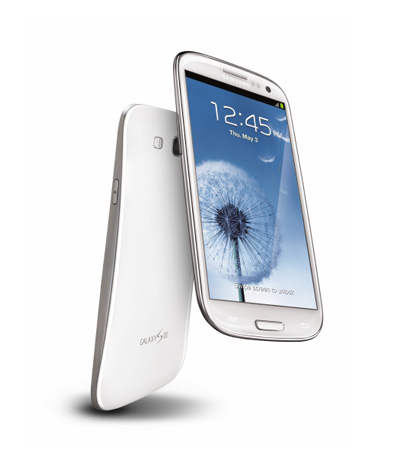
Image via www.samsung.com
According to the testing, the Samsung Galaxy S3 actually loads pages nine percent faster than the iPhone 5 loads them on an LTE network. Oddly enough, in terms of 3G performance, the iPad 2 loaded pages fully 22 percent faster than the Galaxy tablet could do the job. Both platforms, meanwhile, took a median time of over 11 seconds to load the home pages, with the Galaxy S taking 11.8 seconds and the iPhone taking 11.5 seconds. A desktop, however took a median time of 7.1 seconds.
Perhaps the most telling result, however, came with a comparison of 3G and LTE loading times. The average load time for the home pages with 3G was 11.7 seconds, while the average load time was 8.5 seconds for LTE. Given that some experts claim that LTE is 10 times faster on average than 3G, the numbers yielded force serious doubt to be cast upon those claims, a claim expressed by Jonathan Bixby, CEO of Strangeloop Networks. He further said: "These results tell us that, although LTE networks have improved mobile performance, pages are still far too slow. The latest mobile user surveys tell us that two out of three mobile shoppers expect sites to load in four seconds or less. A page that takes 8.5 seconds to load over LTE is still falling short of user expectations."
Worse, Strangeloop Network's findings suggest that not only is the mobile experience slower than expected, it's also of a lower quality, with a third of mobile sites sending up a stripped-down experience to the Galaxy tablet, and nearly a third give mobile users no option to view the full site.
Slower speed and lower quality are not widely regarded as incentives to shop on a mobile basis, and given the growing importance of a mobile shopping experience in overall profit pictures--Rue La La expects to make half of their sales via mobile by the end of the 2012 holiday season--the combination of slower and lower makes for a bad deal indeed.
It's also unnerving to note the sheer differences in quality between platforms. After Apple's claims that Samsung "slavishly copied" Apple's designs, to see that Samsung actually beat Apple in terms of quality can't be easy to live down. It's enough to wonder if Samsung might use some of this information in an appeals process following their recent losses.
The Strangeloop Networks testing has provided quite a bit of food for thought across several industries. From the mobile shopping experience to the differences in network speed to even the differences between brand name devices, many industries were affected in one way or another by the information unveiled here. What will come of these studies remains to be seen, but still, many preconceived notions will have to be challenged by this new information.
Want to learn more about today’s powerful mobile Internet ecosystem? Don't miss the Mobility Tech Conference & Expo, collocated with ITEXPO Austin 2012 happening now in Austin, TX. Stay in touch with everything happening at Mobility Tech Conference & Expo. Follow us on Twitter.
Edited by
Brooke Neuman 
 QUICK LINKS