Since changing its focus to sell higher-end Android devices, Chinese ICT (Information and Communications Technology) company Huawei has been experiencing more success in the smartphone space. But not every phone can or should be a flagship device and, since the company already unveiled its 2013 flagship at CES earlier this year, its latest smartphone, the A199, doesn't quite sport top specs.
That said, the A199 does share a few specs with the D2, particularly its quad-core 1.5 GHz K3V2 processor. Other specs include 2 GB of RAM, a five-inch 720p IPS display, an eight megapixel main camera, with a 1.3 megapixel shooter in front, and 8 GB of internal storage, while a microSD slot enables up to 32 GB of further expansion.
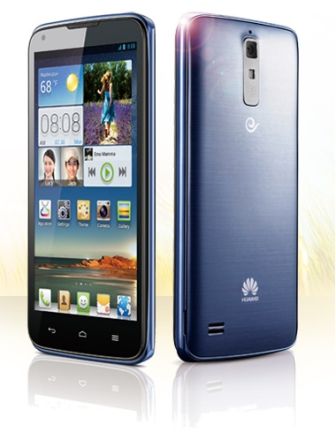
On the software front, the A199 will ship with Android 4.1 Jelly Bean, further ensuring a silky smooth experience alongside that quad-core processor. On top of this, Huawei has placed its Emotion UI, which will likely come as bad news for fans of stock Android as the UI apparently deviates heavily from Google's aesthetic. Still, it has been described as clean and unobtrusive, which is the best one can generally hope for from a manufacturer UI.
In a lot of ways, the A199 shares commonalities with its higher-end competitors, like the Samsung Galaxy S 4 and HTC One, than it would seem at first glance. Indeed, Huawei's latest device is only behind this year's flagships in terms of resolution, since 1080p seems to be the new standard in 2013, and battery size at 2,150 mAh as opposed to 3,000 mAh in the Ascend D2 or 2,600 mAh in the Galaxy S 4.
The A199 would likely only appeal to consumers if it was priced competitively enough to make these steps down in specs worth it when compared to the rest of 2013's high-end lineup. It may not even be an issue in North America, though, as the A199's dual-SIM support likely means it's bound for China and emerging markets.
Edited by
Alisen Downey 
 QUICK LINKS