Looking at recent headlines, you may get the impression that companies are competing – but that’s hardly the truth. Ivan Seidenberg, CEO of Verizon, said at an investor’s event that he was now more like Google than a telco.
But check the stats (see below, as well as
my video blog on this topic).
I don’t think Google sees the resemblance.
Likewise, when it comes to GoogleVoice, it’s a stretch to compare it to AT&T or any other carrier’s primary line services. Traditionally, a primary line is a service is designed to be available at all times and for emergencies. Historically it has been the basis for the Five 9’s requirement on telco equipment.
The telco equipment was very specific to certain services and had associated tariffs for those specific services. When technology is embedded in the rules that surround it, it has a tendency to live on forever.
Ask yourself the question what do these items have in common?
The answer is they are all included in the laws and regulations that impact your phone bill. Old telco regulations live on forever.
So with all these historical items still impacting today’s communications, it was probably optimistic of AT&T to request that intercarrier compensation be harmonized by the FCC. The reality is that the technologies are now all blended and it’s no longer a big difference between solutions – technologically speaking.
Most likely, the costs are not much different today, either.
Now why is this important to 4G? It is important because we have a tendency to maintain the legacy systems as an anchor to our past. In today’s net neutrality discussions, distinctions are being made between voice, video and data, even though a packet is a packet on the Internet.
IMHO (Editor’s Note: We take it this is texting addict Carl Ford’s way of saying, “In my humble opinion”), AT&T is not looking to have GoogleVoice become a primary service, it’s asking for some common sense to be applied. If Google understands it’s being overcharged for terminating certain calls and is allowed to avoid the costs of these calls by blocking certain services, why shouldn’t AT&T and every other carrier have the same rights?
The reality is that moderating rates and creating a level play field is going to be much more difficult than it sounds because there are taxes embedded in these costs and someone has to make up for this tax revenue. Traditionally, there have been taxes embedded in telecommunications costs that enhanced service providers have been some what exempted from paying. However, today most services are being charged some form of tax.
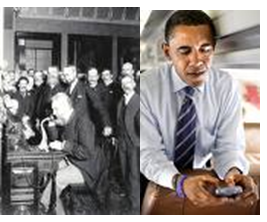
The reality is we are asking for tax reform, which I think was the reason for these calls to the president of the United States.
“The more things change, the more they stay the same.” – French proverb
We will continue with this somewhat “mind boggling” discussion at 4GWE. In the session titled “Net Neutrality: Can Open Be Governed?”leaders from AT&T, Google and leading Washington Law Firms will discuss the issues of Net Neutrality and the possibilities for a truly open Internet to be fairly governed by the FCC. Don’t miss the session and don’t miss the event. For more information visit http://www.mobilitytechzone.com/ or go here to register.
Carl Ford is a partner at Crossfire Media.
Edited by
Michael Dinan
 QUICK LINKS